
The FeelStars workhorse with a mature app ecosystem.
- Bluetooth + app
- via app
- low-moderate
For hands-free use with a mount, The Handy is the practical default at $139; the Lovense Solace Pro adds automation and long-distance sync at $299; the DIY OSR2 and SR6 deliver more stroke force than anything commercial if you will build and maintain it yourself. The Autoblow AI+ is the app-free standalone option.
The FeelStars workhorse with a mature app ecosystem.
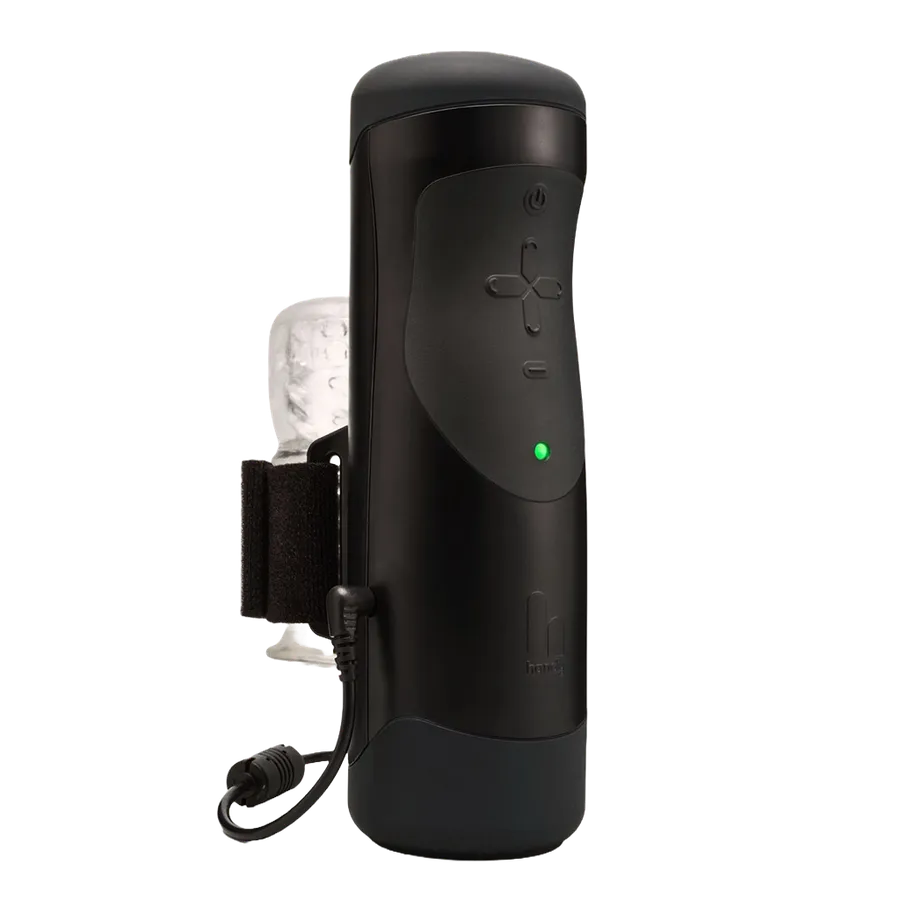
The scripting benchmark: fast, precise stroke length, huge script library.
Automatic stroking with deep app control and scripting.
The DIY open-source servo stroker behind the serious script community.
Six-axis evolution of the OSR platform: linear stroke plus tilt and twist.

Plug-in automatic stroker with AI pattern libraries.
For hands-free use with a mount, The Handy is the practical default at $139; the Lovense Solace Pro adds automation and long-distance sync at $299; the DIY OSR2 and SR6 deliver more stroke force than anything commercial if you will build and maintain it yourself. The Autoblow AI+ is the app-free standalone option.
A hands-free stroker changes what a session is: instead of your arm setting the pace, a motor does, and a mount holds the device while you watch. That sounds simple, but the category splits into three very different purchases - closed automatics, app-driven sync devices, and DIY servo builds with more force than anything on a store shelf. This board covers every hands-free stroker on file, and the differences are bigger than the spec sheets suggest.
Two boxes have to be ticked, and they are not the same box. Automation: the toy produces stroke motion itself. Mountability: it can be clamped or screwed to a surface at the right angle. A device that automates but cannot mount (or mounts badly) still leaves you holding things. Every device on this board carries both flags in our documented specs, which is what separates this list from a generic automatic-stroker ranking.
<figure class="fig-diagram"><svg viewBox="0 0 734 330" role="img" aria-label="The hands-free chain: power, mount, device and control source. The Autoblow needs no app link; every other device adds one."> <defs> <marker id="dg-head" markerWidth="8" markerHeight="8" refX="6" refY="3" orient="auto"> <path d="M0,0 L6,3 L0,6 Z" fill="#ff4f8f"/> </marker> </defs> <text class="dg-h" x="24" y="40">The hands-free chain</text>
<rect class="dg-node" x="24" y="70" width="160" height="100"/> <text class="dg-lbl" x="38" y="98">Power</text> <text class="dg-lbl-2" x="38" y="122">cord (Handy,</text> <text class="dg-lbl-2" x="38" y="142">Autoblow) or</text> <text class="dg-lbl-2" x="38" y="162">battery (Keon)</text>
<path class="dg-arrow" d="M184,120 L210,120"/>
<rect class="dg-node" x="214" y="70" width="160" height="100"/> <text class="dg-lbl" x="228" y="98">Mount</text> <text class="dg-lbl-2" x="228" y="122">clamp or screw,</text> <text class="dg-lbl-2" x="228" y="142">all six devices</text> <text class="dg-lbl-2" x="228" y="162">mountable</text>
<path class="dg-arrow" d="M374,120 L400,120"/>
<rect class="dg-node-strong" x="404" y="70" width="160" height="100"/> <text class="dg-lbl" x="418" y="98">Device</text> <text class="dg-lbl-2" x="418" y="122">motor or servo</text> <text class="dg-lbl-2" x="418" y="142">produces the</text> <text class="dg-lbl-2" x="418" y="162">stroke</text>
<path class="dg-arrow" d="M564,120 L590,120"/>
<rect class="dg-node" x="594" y="70" width="116" height="100"/> <text class="dg-lbl" x="608" y="98">Control</text> <text class="dg-lbl-2" x="608" y="122">app / script</text> <text class="dg-lbl-2" x="608" y="142">/ patterns</text>
<path class="dg-arrow-2" d="M652,170 L652,210 L104,210 L104,170"/>
<text class="dg-lbl-dim" x="24" y="246">Control flows back to the device: Autoblow plays built-in patterns standalone,</text> <text class="dg-lbl-dim" x="24" y="268">the app devices take scripts, the DIY builds take serial commands from a PC.</text>
<rect class="dg-band" x="24" y="288" width="686" height="30"/> <text class="dg-lbl" x="40" y="309">Break the mount or the power and automation stops - both are part of the purchase</text> </svg><figcaption>The hands-free chain: power, mount, device and control source. The Autoblow needs no app link; every other device adds one.</figcaption></figure>The third variable is control: where the motion pattern comes from. The Autoblow AI+ plays its own built-in pattern libraries. The Handy, Keon and Solace Pro take patterns from apps and scripts. The DIY builds execute scripts from a PC with force and precision no commercial device matches - at the cost of building them.
6 hands-free strokers are on this board. Documented prices run from $139 (The Handy) to $400 in parts for the SR6, with a median of $249. The strongest documented consensus currently favors the Kiiroo Keon, whose owner rating in our data averages 8.9.
| Product | Score | Price | Review | |
|---|---|---|---|---|
| The Handy | 8.2 | $139 once | Review |
| Lovense Solace Pro | 7.9 | $299 once | Review |
| Kiiroo Keon | 8.9 | $199 once | Review |
| OSR2 | 6.4 | $180 once (parts) | Review | |
| SR6 | 5.8 | $400 once (parts) | Review | |
| Autoblow AI+ | 5.3 | $249 once | Review |
The Handy ($139) earns its place here on the combination our verdict describes: best-in-class funscript playback accuracy, an open API, and a huge script ecosystem, all mountable and hands-free. The stroke is adjustable up to 15 cm, the sleeve line is interchangeable, and firmware updates keep arriving. The two documented costs of that precision: it is loud at high speeds, and it runs on a power cord rather than a battery - which is fine for a mounted desk setup and awkward for anything portable. For the shortest path from unboxing to scripted, mounted playback, it is the default.
The Solace Pro ($299) is the most complete automatic stroker in the Lovense line, per our verdict, and the price buys features the cheaper devices lack: a self-lubricating reservoir, Wi-Fi, scripted playback and long-distance sync in one box, mountable out of the box. The documented weaknesses are the premium price and a script community that is newer and smaller than The Handy's. If hands-free is the goal and the budget allows, our verdict says the Pro earns its price.
The Keon ($199) is the only battery-powered automatic on the board with a mature content ecosystem behind it: the FeelStars sleeve line (sold separately), app control, and an owner consensus in our data of 8.9 - the strongest agreement here. Script playback is documented as less precise than The Handy, and the app requires an account for synced content. For mounted sessions away from a wall socket, it is the most practical choice.
The OSR2 (about $180 in parts) and SR6 (about $400 in parts) are open-source servo builds driven from a PC over serial through MultiFunPlayer or Intiface Central. Our specs are unambiguous: unmatched stroke force and speed headroom, fully open parts, firmware and community, and the SR6 adds tilt and twist for multi-axis movement that matches scripts better than anything commercial. The costs are equally documented: you build and tune it yourself, safety and maintenance are on you, they are loud, and they need mechanical skill and space. Our verdicts call the OSR2 a tinkerer's power play and the SR6 "the endgame for script enthusiasts; overkill for everyone else." That framing is the honest summary of this whole category segment.
The spec sheets and the verdicts cover the devices; a few practical notes cover the setup, and they are documented across our sources rather than invented. Mounts are part of the purchase: The Handy, the Keon and the Solace Pro are all documented mountable, but none of the three ships with the full clamp-and-arm rig that a fixed desk position wants, so budget for hardware on top of the toy price. Noise carries further than the rating suggests when a device is clamped to a resonant surface - the moderate rating on The Handy and the loud rating on the DIY builds were recorded with the device in hand, and a hollow nightstand amplifies both. Power placement matters more than expected: The Handy and the Autoblow AI+ are corded, which means the mount position and the socket position have to agree, while the battery-powered Keon trades that constraint for charging sessions. And the DIY builds add their own documented reality: the OSR2 and SR6 need space for the frame, a supply of 3D-printed parts on hand, and the willingness to re-tune servo positions after transport - our verdict's phrase "a weekend of building" describes the first setup, not the only one.
The Autoblow AI+ ($249) is the outlier in the best way: no phone, no app, no account - a plug-in automatic with AI pattern libraries and interchangeable sleeves. Our verdict scores it well on ease and not on interactivity: no VR sync, and AC power only. Its privacy story is the best in the class for the same reason - no connectivity means no data leaving the bedroom. For a hands-free automatic that never touches your network, it is the documented pick.
One more axis separates these six devices: the pattern source, and it is worth being explicit about because "hands-free" without a pattern source just means a motor on a preset loop. The Autoblow AI+ plays its own built-in AI pattern libraries - the pattern source is the toy, which is why it needs no app at all. The Keon and the Solace Pro take patterns through their apps, including scripted playback, which puts their ceiling at what the Lovense and Kiiroo ecosystems expose. The Handy takes scripts natively over Wi-Fi and feeds on the open script ecosystem around EroScripts, the largest pattern library in the category. The DIY builds take serial commands from a PC through MultiFunPlayer or Intiface Central and execute exactly what a script file says - with the force headroom to follow it faithfully. In practice this means the same script file produces three different experiences on three different devices, and the fit between pattern source and use case (a partner's app control versus a downloaded script versus built-in patterns) is a bigger decision than any single spec on this page.
Read the linked review before buying: every claim on this page traces to a documented source, and the review pages carry the checked date for prices and availability.